TRIG_POINT
Mountain Bike Suspension Kinematics
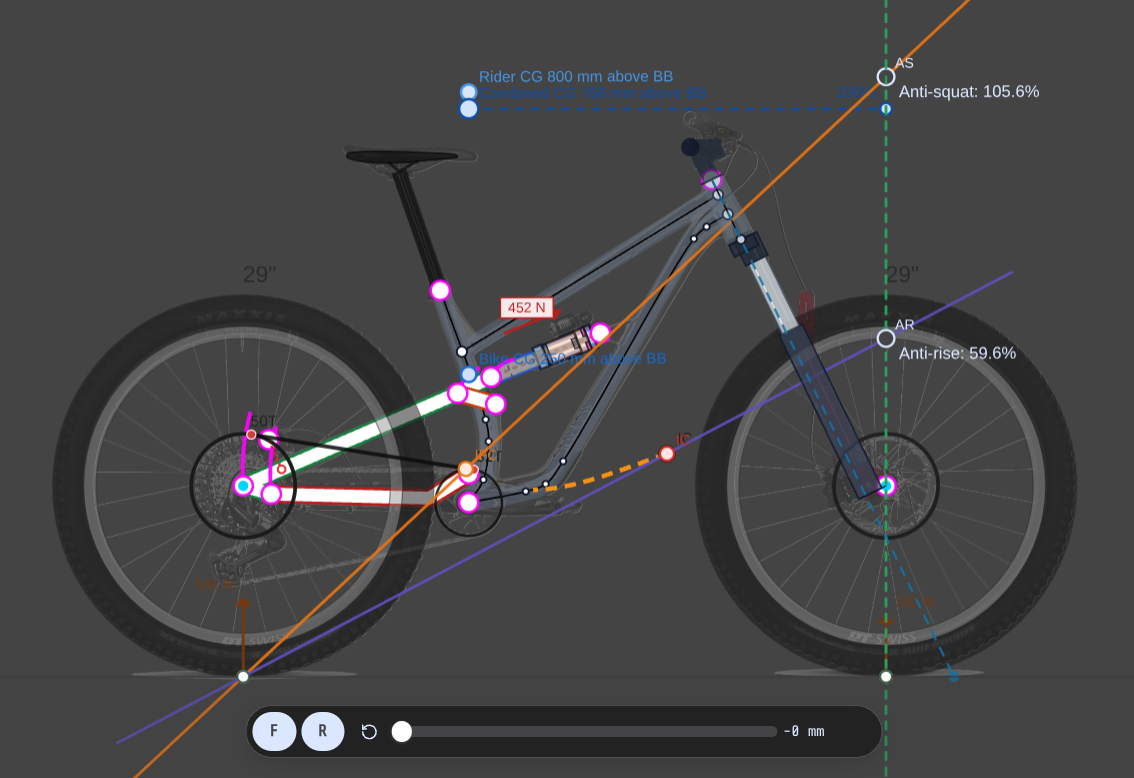
Analyse
Analyse new bike suspension designs from an image and a few basic input settings.
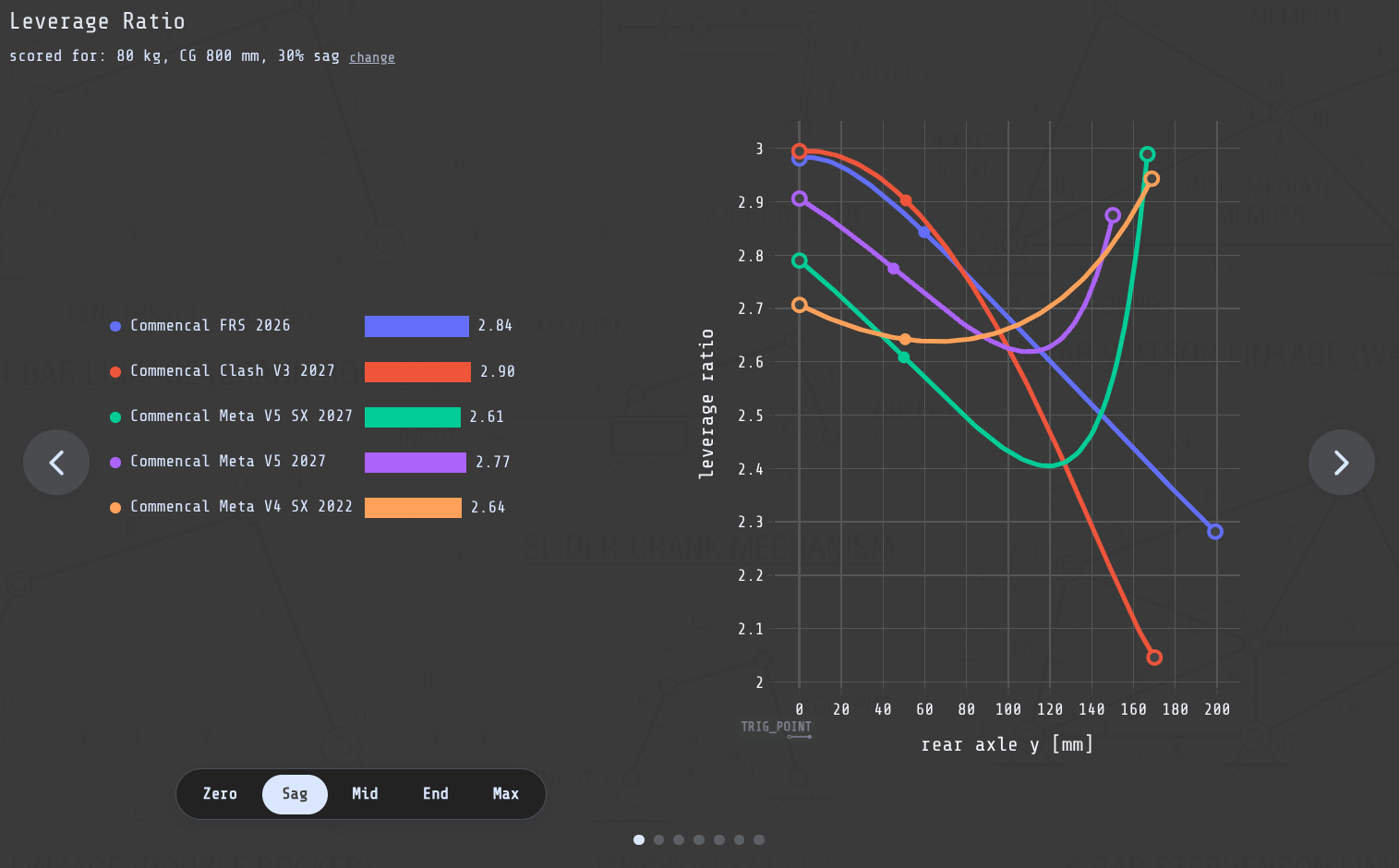
Compare
Compare suspension designs between bikes on a like-for-like basis and get results bespoke to your rider setup.
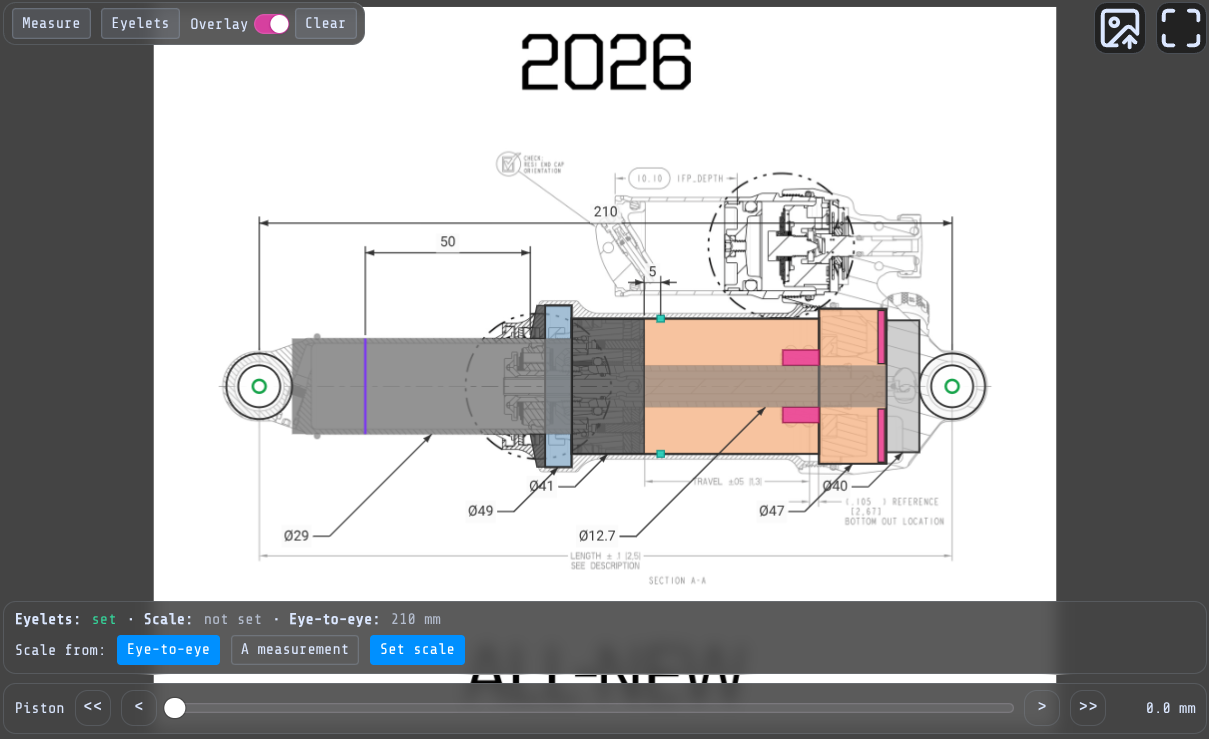
Optimise
Tune your current bike suspension. Simulate the effects of changing volume spacers, changing sag pressures or swapping in a different shock.
Design
Let your mind go wild and design new suspension systems which target specific riding characteristics.
So What Is TRIGPOINT..?
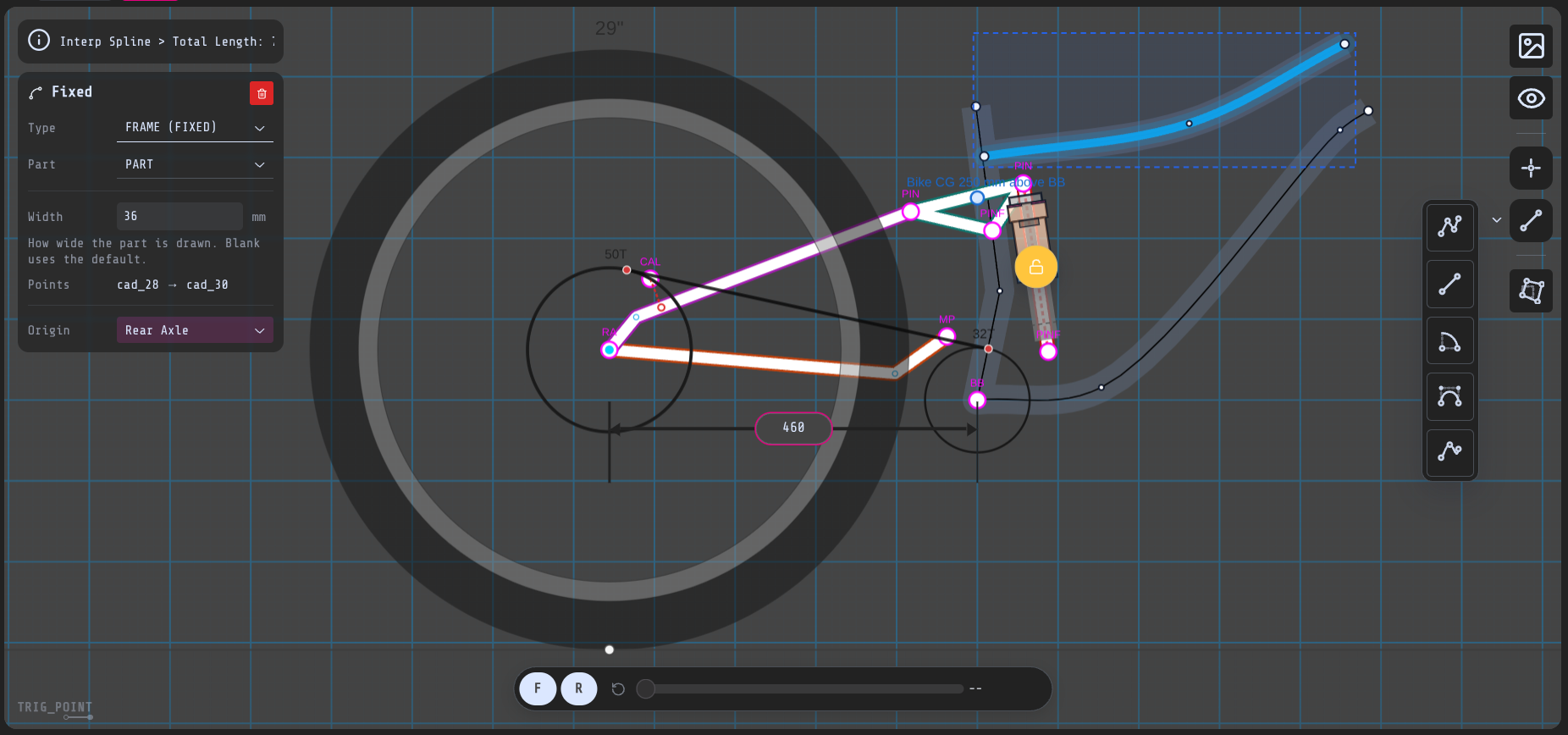
TRIGPOINT simulates mountain bike suspension linkages to reveal the complete system kinematics — then combines them with your bike, shock and rider setup to produce personalised outputs.
Explore:
- Leverage Ratio
- Anti-Squat
— calculated using your rider height and centre of gravity
- Anti-Rise
— calculated using your chosen rear brake bias
- Pedal Kickback
- Rear Wheel Path
- Sag Pressure
— calculated for your rider weight and shock setup
- Rear Wheel Rate
— calculated using your sag pressure, shock characteristics and selected volume spacers
Animate the linkage through its travel to get under the hood and understand what each suspension design is really doing.
But models aren't reality.
TRIGPOINT is an engineering analysis tool, not a perfect simulation of a bike on the trail. The calculations rely on simplifying assumptions, approximations and the quality of the available geometry.
Keep these limitations in mind when interpreting the results:
Mountain biking is dynamic.
Riding is fast, complex and unpredictable. TRIGPOINT primarily uses quasi-static analysis, so many real-world dynamic effects are deliberately simplified or omitted.
Geometry accuracy matters.
Linkage geometry may be derived from photographs or images. Perspective, lens distortion, camera alignment, image resolution and point placement can all introduce errors into the resulting model.
No damping — yet.
Rear wheel rates currently represent the spring response of the suspension system. Compression and rebound damping forces are not yet included.
No friction.
Seal friction, bearing friction, stiction and other mechanical losses are currently ignored.
Simplified shock dynamics.
Gas behaviour inside an air shock depends on factors including compression rate and heat transfer. TRIGPOINT approximates these effects using a simplified polytropic model rather than attempting to reproduce the full transient behaviour of the shock.
TRIGPOINT is therefore best used to explore, compare and understand suspension behaviour — rather than treating any single number as absolute truth.
LATEST
Newest bikes in the library
Browse all
BIKE BRANDS
SHOCK BRANDS
TRIG_POINT
© 2026 TrigPoint